The decision is the game.
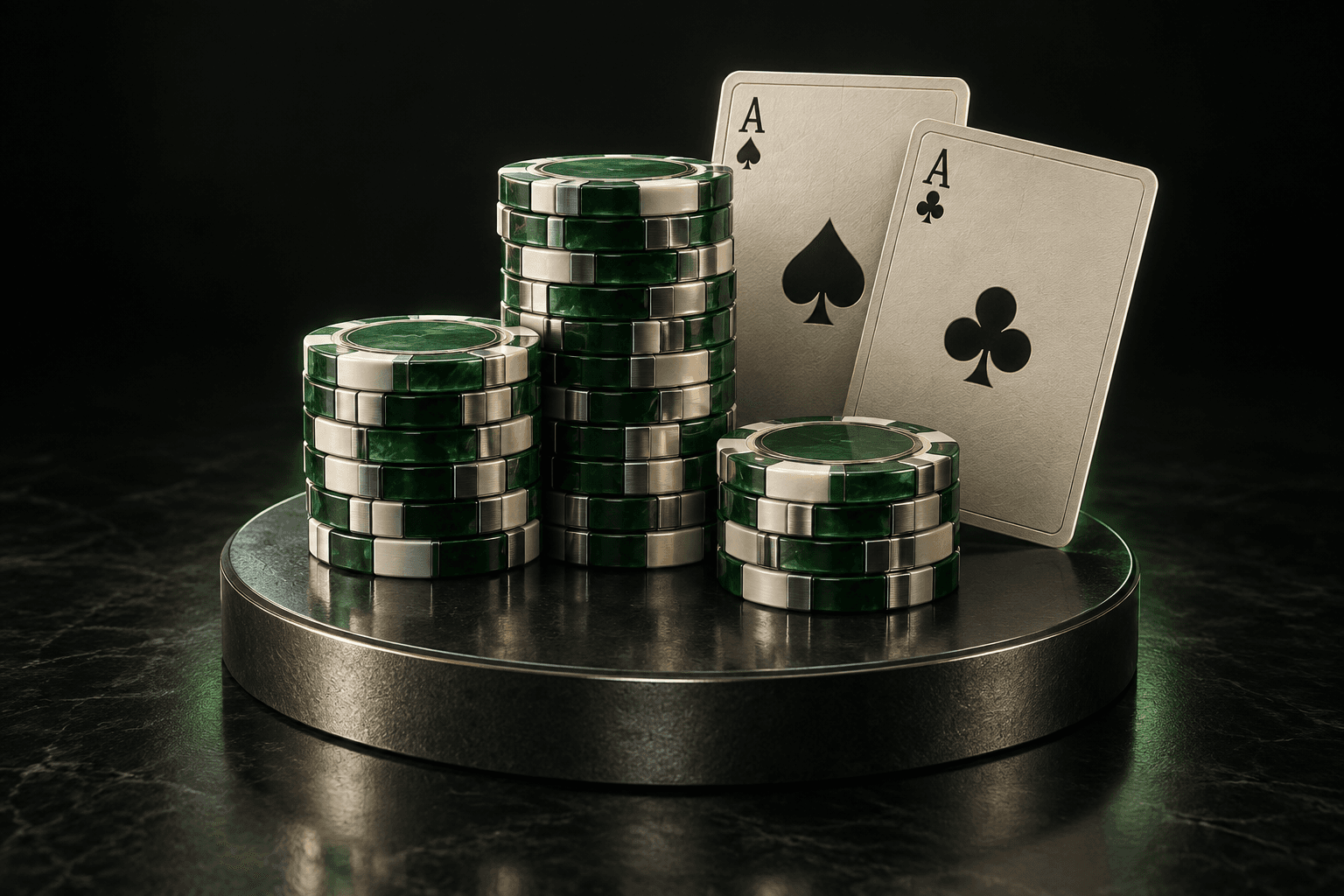
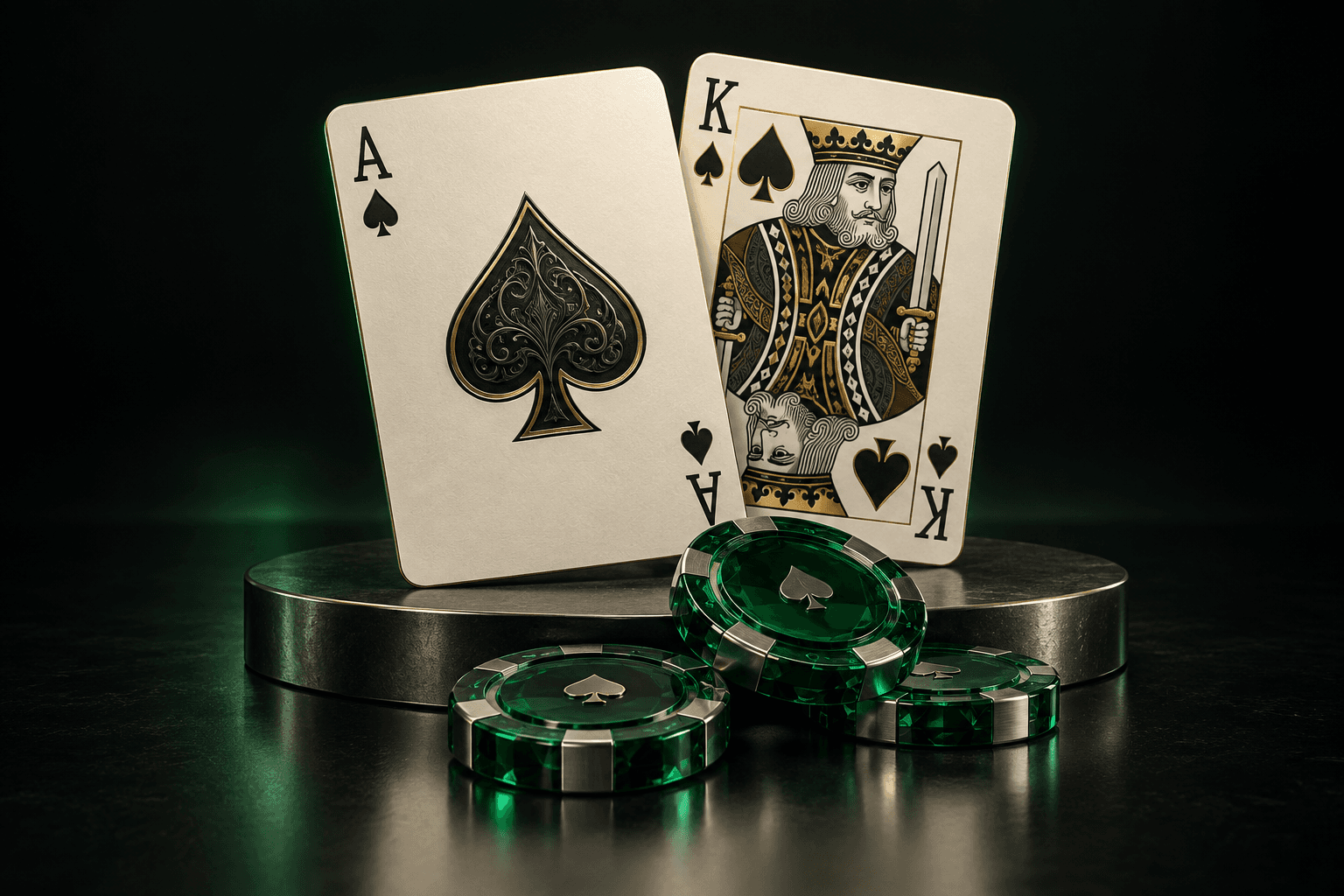
In blackjack, you play against the dealer. Get closer to 21 without going over; matching the dealer usually returns your stake. Number cards use their printed value, face cards count as ten, and an ace can count as one or eleven.
Start with the table rules.
A natural blackjack generally pays 3:2 at a favourable table; a 6:5 payout is worse for the player. Whether the dealer hits or stands on soft 17, the number of decks, and surrender rules all affect strategy. Read the rules before choosing a chart.
Your move, explained.
Try a hard, non-pair hand: no ace counted as 11. This example assumes 4–8 decks, dealer stands on soft 17, dealer peeks, and no surrender.
Take another card. Even when hitting risks a bust, standing can have a worse expected result.
This is a hard-total learning tool, not a full strategy chart. Pairs, soft hands, surrender and different table rules need separate decisions.
Three types of hand.
- Hard: no ace counted as eleven. Use the tool above.
- Soft: an ace still counts as eleven. That flexibility changes the decision.
- Pair: splitting can be an option. Under common rules, split aces and eights; keep tens together.
Keep it considered.
Practise the rules before adding stakes. Set a spending limit and a stopping time in advance. A frustrating hand is a reason to pause, not to double the next bet.
You’ve reached the end of this field guide. Revisit the ideas at your own pace.