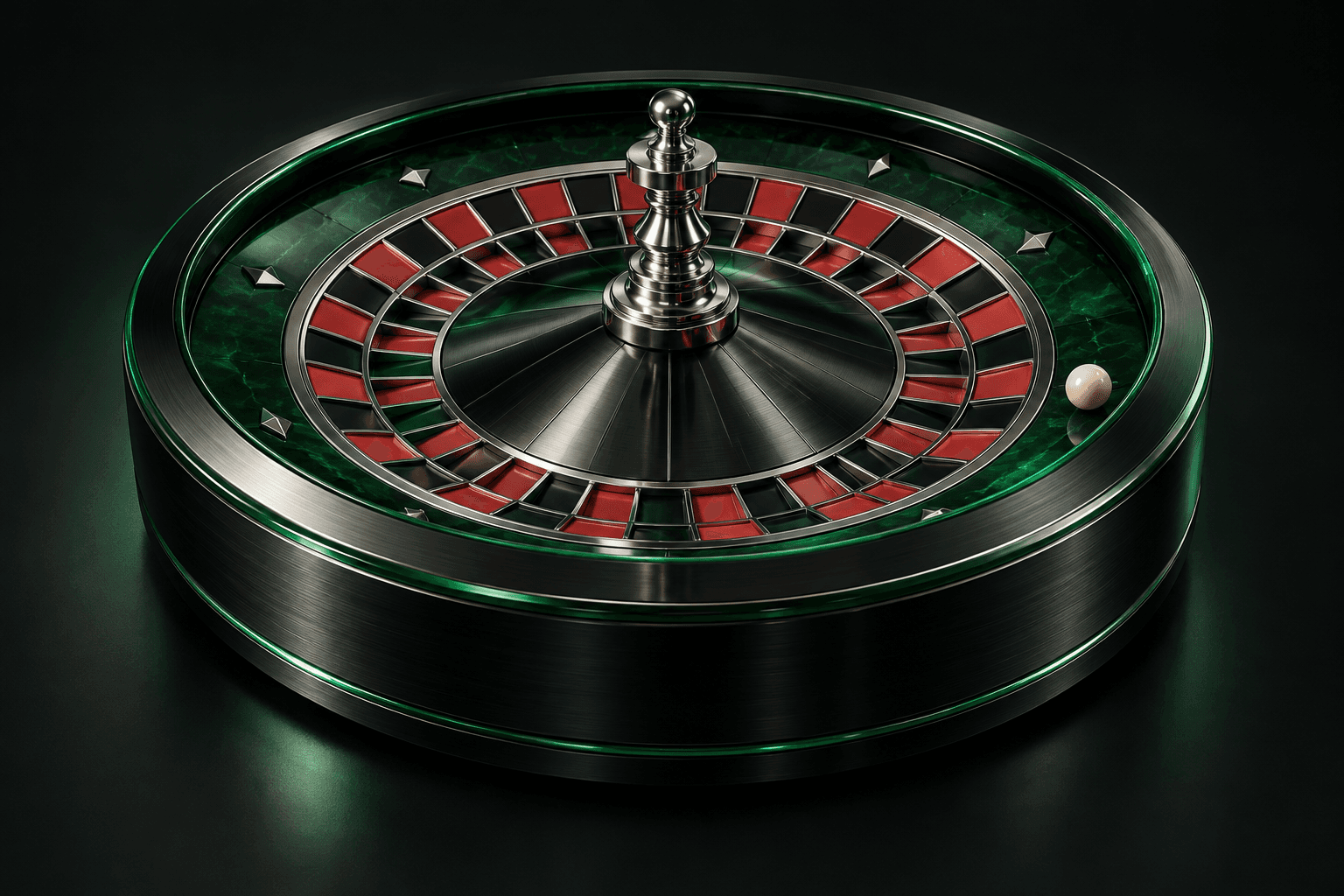
One wheel. Different probabilities.
European roulette has 37 pockets: zero and 1–36. American double-zero roulette has 38. The extra pocket matters because the common payouts stay the same while the chance of winning falls.
What are you covering?
Inside bets cover individual numbers or small groups. Outside bets cover larger sets, such as a dozen or red. A standard single-number bet pays 35:1 in profit; red or black pays 1:1. A larger covered set wins more often, but pays less.
A closer look at the odds.
Compare standard bets on single-zero and double-zero wheels. These calculations exclude special rules such as la partage.
Pays 1:1 in profit, plus the original stake. House edge: 2.70%.
A long-run average is not a prediction for your next spin or session. Changing the stake does not change these probabilities.
The zero is the difference.
Standard single-zero bets have a house edge of about 2.70%; most double-zero bets have about 5.26%. Special bets and rules can differ. Red is not a 50/50 event: zero is neither red nor black.
Understand the limit of a system.
Doubling after losses increases exposure and eventually meets a bankroll or table limit. It does not change the wheel. Decide what you are comfortable spending before the session, and treat the outcome as uncertain.
You’ve reached the end of this field guide. Revisit the ideas at your own pace.